Visit Jerry's Personal Website at www.jerryvasilatos.com
1 Year After Osseointegration: A Chicago Patient’s Breakthrough Journey
After 40 years of mobility limitations, Jerry Vasilatos became the first compress-fit osseointegration clinical trial patient in Chicago—and is now documenting the real-world outcome to raise awareness for amputees.
Read my Medium Editorial
The $5.5 Billion Reason You’ve Never Heard of Osseointegration -
And Why It Matters for U.S. Health Policy
APRIL IS LIMB LOSS & LIMB DIFFERENCE AWARENESS MONTH!
Learn more at:

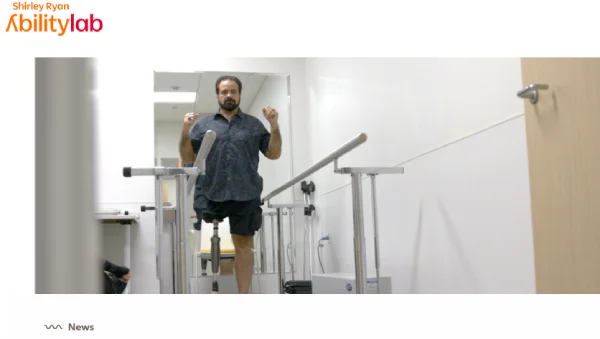
Shirley Ryan Ability Lab Spotlight
April 2, 2026 — WGN News Feature: Jerry Vasilatos on Osseointegration


Latest on Instagram
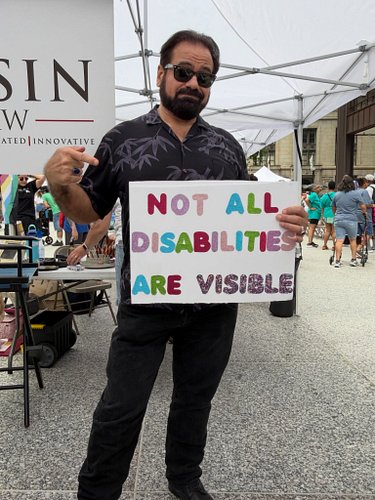


My Story
I lost my left leg above the knee when I was 20 years old after a near-fatal accident in 1986. For the next 35 years, I lived with a short residual limb and a conventional socket prosthetic — and everything that comes with it. Pain. Pressure sores. A socket that dug into my groin after two or three hours and could slide off whenever I perspired. I wore my prosthetic once or twice a week, always with a cane, always bracing for the moment it would fail. The rest of the week, I got around on crutches or in a wheelchair.
I gained weight. My blood pressure and cholesterol went through the roof. I was depressed. At 58, I weighed 240 pounds, I was on multiple medications, and I felt like my world was shrinking a little more each year.
Despite all of that, I refused to let my disability define the boundaries of my life. I used my personal injury settlement to fund my first feature film, Solstice, at age 25 — launching a career as a filmmaker and media producer with credits spanning features, television, commercials, documentaries, and music videos. I founded my production company Nitestar Productions and manage the YouTube Channel Chicago Corner. I also invented the SandPad Landpad EasyWalk Stabilizer — a patented cane and crutch accessory with over 600 reviews — after I couldn't find a product that would help me get across a beach on my crutches during a trip to Greece.
But the achievement I'm most proud of happened in September 2025.
While researching an upgrade for my aging C-Leg prosthetic knee, I stumbled onto something I couldn't believe: a procedure called osseointegration — where a titanium implant is surgically anchored directly into the bone, eliminating the socket entirely. Your prosthetic leg clicks onto your skeleton. No suction. No pull sock. No socket digging into your groin. Just a direct connection between you and your leg.
I was stunned to learn that this procedure had been available in Australia, Europe, and New Zealand for over a decade. And I was even more stunned to learn that most American amputees — and most of their doctors — had never heard of it. When I first asked about osseointegration at Rush Presbyterian Hospital in Chicago, their orthopedics department had no idea what I was talking about.
I found Northwestern Medicine on my own, through a Google search. There, I met Dr. Terrence Peabody in the Department of Orthopedic Surgery, who was conducting an FDA clinical trial for a compress-fit osseointegrated implant sponsored by Balmoral Medical. I qualified for the trial. And in March 2025, I became the first amputee in Chicago to receive this implant.
One year later, my life is unrecognizable.
I walk every day — without the cane I relied on for 35 years. My prosthetic leg clicks on in under 10 seconds. I feel it as a part of my body, not something strapped onto me that could fall off at any moment. My activity levels have gone from roughly 50–60% to 95%. I've had zero complications — no infections, no falls, no hardware failures. I went from 240 pounds to 205. I'm off all blood pressure and cholesterol medications. At my 60th birthday party, I walked around a crowded bar for hours, hands free, without a single thought about my leg.
I owe this outcome to an extraordinary team: Dr. Terrence Peabody and the surgical team at Northwestern Medicine, my Northwestern Rehab physical therapist Eric Howe, and my prosthetist Mike Soce at the Shirley Ryan AbilityLab (ranked #1 rehabilitation hospital in the country) who fitted me with the prosthetic components that connect to my implant.
I created this website and my YouTube channel because no one told me this procedure existed since its introduction in the U.S.
I'm a filmmaker by profession, so I did what I know how to do — I picked up a camera and started documenting everything. From the night before surgery through my one-year anniversary, My OI Journey is the most comprehensive first-person video record of the compress-fit osseointegration experience available to the American public. Broadcast-quality. Unfiltered. Every milestone, every setback, every honest moment of what this process actually looks like.
I'm doing this because I believe osseointegration should be the default treatment considered for every above-knee amputee in good health. It shouldn't take a lucky Google search and 35 years of suffering to find out it exists.
Right now, I'm the only enrolled patient in the Belmoral Medical compress-fit clinical trial at Northwestern. Nine more participants are needed in Chicago alone. The surgery that changed my life is available right now — and almost nobody knows about it.
If you're an amputee, if you love someone who's an amputee, or if you're a medical professional who works with amputees — watch the videos, share this channel, and help me spread the word. And if you're considering osseointegration yourself, reach out. I'm happy to share everything I've learned.
This procedure gave me my life back at 60. I want to help it do the same for you.
— Jerry VasilatosChicago, Illinois
Creator & Host, My OI Journey
Contributing to the Future of Osseointegration
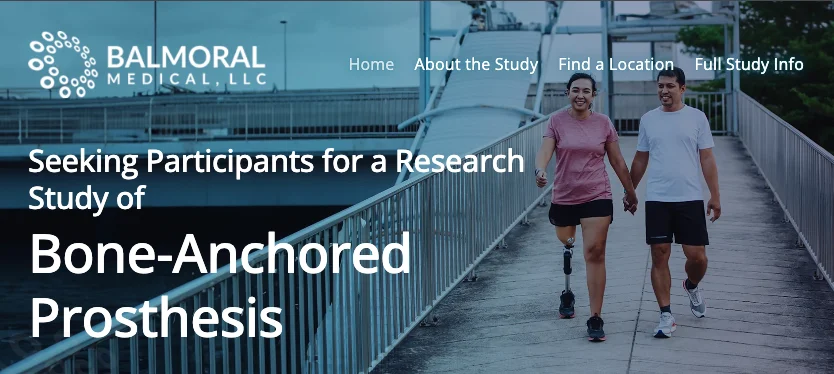
My procedure was performed through a clinical study sponsored by Balmoral Medical, evaluating a compress-fit osseointegration implant designed to improve stability, comfort, and long-term mobility for amputees.
Participation in this research program allowed me to contribute directly to the development of next-generation prosthetic solutions while documenting my recovery and real-world outcomes. Clinical studies like this are critical to expanding access to innovative treatments and helping the medical community better understand how osseointegration can improve quality of life.
If you’re interested in learning more about the study and the technology being evaluated, visit: